Posts Tagged ‘Target’

Toyjobs.com: Review and Forecast

Monday, January 25th, 2010

Same store retail sales eventually rallied after a late December snow dump to rise about 3 percent.  Of course, this was compared to the very weak year earlier period.  It’s also difficult to discuss retail sales trends without including Wal-Mart, but Wal-Mart doesn’t report monthly sales data anymore.  As a shareholder, I like that but as a chronicler it’s a pain in the neck.  I would assume that in the current economic climate they did well but we should also keep in mind that their December ’08 numbers were better than most which will skew current comparisons downward.

During the past year retailers seemed to get it just about right.  They navigated the tough economic terrain by discounting just a few items and offering other promotions but by keeping prices relatively steady for much of their inventory.  Of course in the toy aisle, Wal-Mart did its usual October price slashing which was then followed by much of the retail community.  NPD reports that overall US toy sales were down by 2 percent.  Obviously that isn’t good but it is far from being catastrophic.

While the congress fiddled (yes, the Nero illusion is intended) with a healthcare plan that almost nobody wanted, the rest of the country focused on jobs. The economy began to grow in the second half of 2009 but the jobs market lagged behind with businesses still being reluctant to hire.  Although the December headline (U3) unemployment number was unchanged at 10% from November, the broader measure of U6 – which includes those forced to work part time or discouraged from seeking work – rose from 17.2 to 17.3 percent.

Here at Toyjobs we had our worst year ever.  The overall number of searches was way down and many of the searches that were started were canceled or put on interminable holds.  Waxing philosophically, “Some days the fish are there and some days they are not but I’m out there fishing hard in either case”.  Perhaps a quarter of all search firms went out of business last year but thanks to three decades of success Toyjobs is in strong financial shape and I will be out there fishing well into the future.

Recent discussions with toy execs returning from Hong Kong reveal that the mood at the Hong Kong Toy Show was mostly buoyant.  Retailers were pretty clean on inventory and were looking to buy.  That said, toy companies may want to temper their enthusiasm.  Wal-Mart and Target are cutting back on toy space, SKUs, and vendors.

In Wal-Mart’s case, toys have never been all that profitable and have primarily been used to drive foot traffic during the fourth quarter.  The “groceryization” of Wal-Mart has worked out so fantastically – with the average customer visiting the store once a week rather than once a month – that toys are no longer needed to drive traffic.  Of course, they’ll keep their hand in and stock the obvious big company items backed by big advertising dollars, but they’re not going to think too hard about the toy business anymore – no more guessing at what will be a hot seller.  They’re just going to focus on moving merchandise.  Don’t expect them to take any chances.  I’m not sure of the thinking behind Target’s strategy (no grocery to drive traffic), perhaps it’s just a case of me-tooism.

This trend will obviously benefit big toy companies who are able to make big TV advertising commitments.  It also allows other retailers to create a larger toy footprint without having to compete with Wal-Mart’s crushing margins.  Sears has been testing getting back into the business.  Barnes and Noble and Borders, two retailers who generate a lot of traffic despite Amazon, are putting a greater emphasis on toys.  I suspect that other retailers will follow suit now that they won’t have to compete with Wal-Mart’s pricing.  Not initially, but over the longer pull, toy companies should be pleased with the ability to diversify their customer base and at higher margins.

The biggest beneficiary of the Wal-Mart/Target downsizing of the toy department should be Toys ‘R’ Us.  People like to shop specialty stores because of their broader product offerings.  Toys ‘R’ Us is also taking big steps to counteract their Achilles heel – the fact that they have traditionally been standalone – separate trip stores.  During the past holiday shopping season they opened more than 80 pop-up stores in malls and shopping centers.  The concept may have been quickly conceived and erratically executed but they should have it nailed by 2010 or 2011.  Toys ‘R’ Us has also been working hard to turn itself into a destination by placing its Babies ‘R’ Us and Toys ‘R’ Us stores side by side.  Babies ‘R’ Us can function similarly to Wal-Mart’s grocery business by bringing in customers for their weekly needs (diapers, wipes, etc.) and acting as a feeder for Toys ‘R’ Us.  We should all hope that this strategy works as the toy industry surely needs a stronger Toys ‘R’ Us.

Here at Toyjobs, search starts jumped significantly in mid December as companies anticipated a new year with new budgets.  It is still too soon to tell if this improvement will be sustainable throughout the year or if it is just a new budget bump.  It is also too soon to tell if these search starts will turn into actual hires or be canceled or put on hold as so many were in 2009.  I should have a much better handle on that by the time of our post New York Toy Fair issue.  I can tell you that the air is different than it was even six months ago.  It “smells” better.  Certainly some companies are still having problems and most companies are still cautious but the palpable sense of fear is gone and has been replaced by a feeling of “we’re working through it”.  My sense is that this will be a recovery year much like 2003.  It won’t be a good year but it will be increasingly better than last.  I just hope that we only have ONE recovery year rather than two or three.

Muddling thru,

Tom Keoughan

Fall Toy Preview: A Little Grumbling Despite The Full Dance Cards

Friday, October 30th, 2009

My experience at the Dallas Fall Toy Preview was that the overall mood was “workmanlike”.  While I can’t say that people were exactly upbeat, there wasn’t the pervasive sense of gloom that we’ve seen at the last few trade shows.  Most people seemed to give off more of a sense of being survivors, of being beaten up but having made it through with the knowledge that the worst is over but that there are still some tough miles ahead.

In the weeks leading up to the show there was a lot of talk that Target and Wal-Mart (both extremely early price choppers this year) were not planning to attend.  I hear that before every trade show and, as always, Target and Wal-Mart sent buyers although not their entire contingent.  Even with that I still heard a lot of grumbling at the show despite the fact that most companies had very full dance cards.  My sense is that those people and companies who were disappointed were so because they had a false set of expectations.  If you go into Dallas thinking that you are going to write a Target order, I can guarantee you that you will be disappointed.  This is a great show for getting retailer feedback about your offerings, giving you a chance to tweak product, packaging and assortments prior to the all important Hong Kong Toy and Gamers Fair in January.  It’s also a great time to focus and have some quality meetings with second and third tier retailers.  As one VP Sales said to me “even if Wal-Mart and Target weren’t here at all, I have the opportunity to meet with fifty customers in just three days.  Where else would I want to be?” 

With Wal-Mart de-emphasizing the toy aisle those second and third tier retailers are becoming more important.  By stepping back, Wal-Mart has allowed other retailers to see opportunity in the toy business and many of them are responding aggressively.  Toys ‘R’ Us is stepping into the malls with eighty pop-up stores.  This will be their first year of doing this so their execution is a question mark but let’s face it, anything has got to be an improvement over the mess that was the KB Toys retail experience.  Sears is testing getting back into the toy business and, if successful, will make a bigger commitment for 2010.  Barnes and Noble and Borders, two retailers that definitely still get traffic, are putting a greater emphasis on toys and providing a lot more shelf space.  I suspect that other retailers will follow suit now that they won’t have to compete with Wal-Mart pricing on as many products.  Toy companies should be happy with the increased shelf space, diversification of customers, and the likely higher margins to be had from these retailers. 

What toy companies should be complaining about is the lack of trade show support from toy behemoths Mattel, Hasbro and Lego.  This lack of support has now spread to second tier players such as Jakks Pacific, Spinmaster and MGA.  Certainly this makes business sense for larger companies as they know they will get their face time with the retailers.  Obviously, they would prefer that buyers be totally focused on their product line rather than “distracted” by a hundred smaller competitors.  Alright, I get it, but the toy industry may want to consider whether they want these large companies dominating the TIA board.  Certainly, the TIA needs their dues but one of TIA’s main functions is to organize trade shows and industry events.  In choosing not to support trade shows, these companies’ dominant place on the TIA board is a clear conflict of interest.  One of a trade organization’s most important missions is to promote and protect the interests of it’s smaller and medium sized members.  The big boys have the ability to fend for themselves. 

In our isn’t that ironic file:  Mattel has reached a settlement in twenty-two class action suits over their widespread product recalls in 2007.  The recalls resulted in over-regulation which disproportionally affects small and medium size toymakers.  While Mattel can amortize testing costs and manpower over a gazillion products sold; the smaller companies are hit much harder by testing costs, time to market and eyestrain (from having to wade through all those crazy new regs).  Creativity has also been blunted because small companies can no longer produce a new and innovative product and take a flyer to see how it sells in the marketplace.  The new rules mean that a company needs pretty large presells to be sure that a product will at least break even.  Now do I think that Mattel intended this from the beginning?  Of course not, but the fact remains that Mattel is one of the biggest beneficiaries of their own quality and product safety failures.  If the court approves this settlement – it looks to me like they got off cheap. 

Toy industry hiring continues to slowly improve.  It’s certainly not good but it’s better than it was six or even three months ago.  My continuing forecast is that hiring will continue to be weak at least until the August/September (and it may take longer) time frame.  For most of 2010 hiring will be slow although not as bad as 2009.  Some very important meetings are coming up in December and January. Those meetings are not with retailers and not in Hong Kong but with banks.  Banks slashed loans and lines of credit in 2009.  With banks still reluctant to lend, regardless of Holiday sales numbers, I can’t imagine that seasonal fashion businesses will be at the top of their lending lists. 

Muddling thru,

Tom Keoughan

Bleak Times: Will Walmart Steal the Silver Lining in 2009

Sunday, November 9th, 2008

The Dallas Toy Show began amidst the throes of the credit crisis.  The stock market was plunging on a daily basis while the economy was having a severe heart attack.  No wonder then, that most people’s attitude was initially, to put it mildly, trepidatious.  The Christmas sell through season was looking bleak.  Retailers had been reluctant to make large inventory bets and everyone from retailers to toy companies to Asian manufacturers were having difficulty obtaining the capital necessary to fund operations.

Many, if not most, small and medium sized toy companies are not self-financing and operate on bank loans and lines of credit.  We had just seen both Dolly Toys and Sababa Toys fold and MegaBrands was arguably (I’m sure that they would argue that they were not) teetering.  Banks were and are tightening up on business loans and reducing lines of credit.  They are also reducing credit card limits to consumers.  The scariest quote that I read comes from The Wall Street Journal on October 17, “Credit has gotten so tight in recent weeks that companies contemplating a bankruptcy filing can’t find the cash needed to go through the process.”  We can’t even afford to go bankrupt anymore.  Whew!

Fortunately as the show went on the mood visibly improved.  Most of the important retailers were there (with the conspicuous exception of Costco).  The majors (Wal-Mart, Target) may have only been making short, almost social, stops but toy company executives were telling me that they were having very productive meetings with second tier retailers.  This should inform toy companies how to approach the show in the future.  Wal-Mart, Target and Toys ‘R’ Us aren’t going to give you much more than a little face time here.  Accept that and be prepared to make the most of it.  This isn’t the time to sell them, but rather, know in advance what questions you want to ask and what answers you need to positively affect your business.  As for second and third tier retailers; this is the time to sell the hell out of Walgreen, Shopko and Books-A-Million.

The general mood improved as companies realized that either sitting around moaning or being paralyzed by fear was a sure road to ruin.  The only way to survive, and that survival is not guaranteed, is to go out and do business – so get to it.

Speaking of sitting around moaning; the one very justified gripe that I heard over and over again concerned the new product quality regime.  It seems like no one with any real industry experience had anything to do with developing it.  While its final goals are admirable, it is not physically or financially feasible.  Also, the smaller and medium sized firms are hit disproportionately as they have to amortize the costs over a fewer number of goods sold.  The unasked question in the room is this: What portion of everybody’s testing bill should the main offender, Mattel, pay?  It’s appalling that this works in their favor by putting undue pressure on smaller companies, mainly due to Mattel’s many screw ups.

In other news of big bullies acting to the detriment of the entire toy industry: Wal-Mart launched all of retail into a toy discounting spiral on the spectacularly early date of October 1st.  What’s next?  Christmas in July?!  This, even though it conflicts with consumer behavior which shows that shoppers are purchasing closer to the time of need.  For all the hoopla over Black Friday and the Saturday after Thanksgiving, in recent years the biggest shopping spike has been the weekend before Christmas.  Wal-Mart’s annual attempt to push the Christmas shopping season ever earlier fails with consumers but the discounts can be viewed as a very effective kill the competition strategy.  Those discounts have got to hurt seasonal retailers like Toys ‘R’ Us and KB Toys.  KB has been tottering for years and with the economy in shambles one has got to wonder whether they’ll make it through this time.

Wal-Mart is also hitting Chinese suppliers with a slate of stringent environmental and safety mandates, just as manufacturers are facing rising costs and dwindling demand for their products.  Thousands of factories in southern China have closed this year due to soaring costs and tougher environmental and labor standards.  We’re all for safe products, fair labor practices and a cleaner environment; the problem is when the big bully, whether it’s Wal-Mart or the federal government, mandates costly procedures and then doesn’t help pay for them but rather just pushes the costs onto others.

In 2008, toy manufacturers’ costs soared 25-30% but retailers led by Wal-Mart only allowed price increases of 5-8%.  2009 promises to be an even more difficult year in terms of sales volume.  The potential silver lining is that lower oil prices should translate into lower resin prices and transportation costs and thus higher margins.  Unfortunately, I heard at the Dallas show that Wal-Mart is already angling to grab back those margin increases from toy manufacturers.  In a recessionary environment, Wal-Mart is going to want to set very low prices and they are NOT going to want to pay for it.  They will want to take it out of the hides of their already margin squeezed suppliers.  In order for other retailers to compete they will need to mimic the practices of the sales volume and low price leader.  I’m afraid it’s going to feel like they’re kicking you in the ribs while standing on your throat.  Sorry to be so “cheery” but I calls ‘em like I sees ‘em.

Trepidatiously yours,

Tom

Toy Fair Outlook – Cautious

Friday, March 21st, 2008

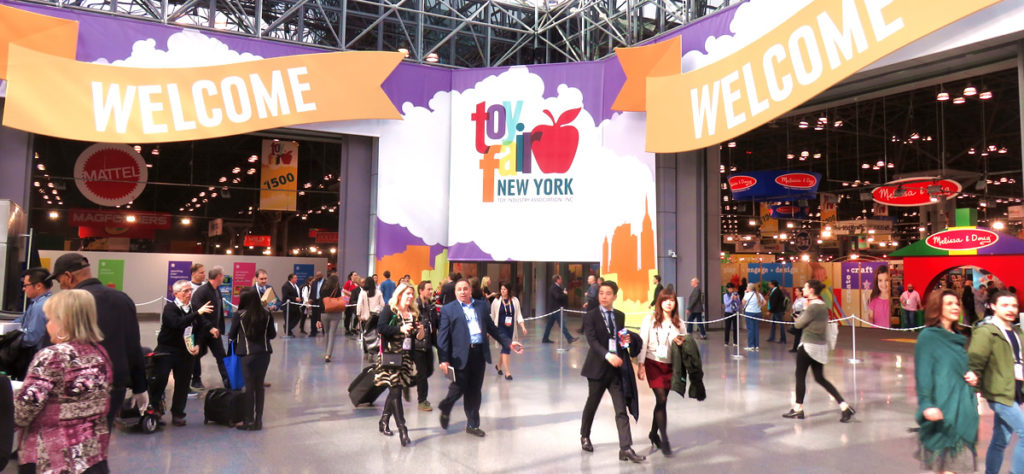
The February Toy Fair seemed to go pretty well. The Javits Center maintained its world record of having the hardest floors on the planet. I did notice that several mass market companies were not “showing” although some had representatives lurking in the aisles. Mass market companies that grumbled beforehand that this would be their last one all seemed satisfied and said that they would be back. Specialty toy companies were having a field day and seemed to be a much more jovial group. I think a company’s sense of success at the show was very much driven by their expectations coming into it. It’s an excellent show for specialty manufacturers but also a very good place for mass market companies to focus on second and third tier retailers. Over the last couple of years, most of the toy company executives I have spoken to at Toy Fair have been cautiously optimistic but this year I would characterize their mood as just – cautious.

Of course, there is good reason to be cautious with big recession thunderclouds on the horizon. I don’t get the sense that recession has hit yet. Despite anecdotal evidence of empty store aisles, retail sales were strong in February. Wal-Mart’s total sales were up 8.9%, Target up 5.9% and Costco up 11%. That said, everyone from businesses to consumers seems to be standing around very quietly wondering why they’re still on their feet. It’s like waiting for a tornado. The press may not be talking us into a recession but they are certainly hastening its arrival. It’s also a little unnerving that the balance sheet of a single company could throw us all into crisis. If MBIA receives a ratings downgrade all hell is going to break loose. I suspect there would have to be some sort of government intervention.

Add to economic backdrops the particular challenges that the toy industry is facing now – rising costs, the rising Yuan and stingy retailers only allowing prices to rise 5-8% – and you have the making of thinner margins and a very difficult year.

Because of the string of January and February Trade shows it is always difficult to get a read on toy company hiring at this time of year as companies are typically too busy to “pull the trigger.” I can say that search starts have been strong during the period and I have every indication that many of these will close during the coming month. I should be able to pass on a more definite outlook on the subject in my next communiqué. I just hope that it’s not coming from a bunker.

All the best,

Tom Keoughan

‘Tis the Season for Statistical Confusion

Monday, December 10th, 2007

It’s time again for the annual swirl of confusing numbers emanating from retailers and Wall Street’s retail analysts.  Retail traffic was up on “Black Friday” and the post holiday weekend, but the average consumer spent less, an average of $347 down from $360 a year ago.  Surveys showed that the average person had completed 36% of their holiday shopping which is equivalent to last year.  All this seems to indicate that this year we had a better gauge due to a larger statistical sample which seemed to show that consumers will be spending less this Christmas.

But all the hype and hoopla which surrounds the day after Thanksgiving exaggerates the extent to which it predicts total holiday sales.  There are plenty of people, like me, who wouldn’t be caught dead anywhere near any retail establishment (with the possible exception of the wine shop) at any time during the entire weekend.  “Black Friday” and the following weekend are the shotgun start to the high shopping season – not a predictive bellwether. 

Here’s where things get really confusing.  If you look at the following chart, it’s easy to see that total November sales were very strong.  Unfortunately, comparisons are difficult.  There was an extra “shopping week” at the end of November which skewed total sales numbers higher and that extra “shopping week” will be lost when we examine December sales.  Also both store traffic and sales volume dropped off after Thanksgiving weekend.  We should also consider that due to the long “indian summer”, throughout much of the nation, that a significant portion of the spending went toward warmer clothing.

Bargain-Hunting Season    
Retail sales for November 2007    
 

Total November sales

 
Discounters

In millions

Chg. From year ago

Comparable stores chg. from year ago

Wal-Mart*

$31,718.0

+8.4%

+1.5%

Target

5,972.0

+16.7

+10.8

Costco**

5,720.0

+13.0

+6.0

Department Stores      
Macy’s

2,713.0

+13.9%

+13.4%

Kohls

2,023.2

+20.0

+10.2

J.C. Penney***

1,709.0

+5.8

+2.6

Nordstrom

804.9

+7.4

+8.7

Dillard’s

559.3

+2.0

+1.0

Neiman Marcus

360.0

+8.7

+5.8

Saks

347.6

+26.3

+25.7

Apparel      
TJX

1,800.0

+10.0%

+7.0

Gap

1,540.0

+11.0

0

Limited

858.7

-8.4

-7.0

Ann Taylor

209.2

+12.2

+3.9

Teen Apparel      
Abercrombie & Fitch

352.3

+25.0%

+2.0

American Eagle Outfitters

285.8

+16.0

0

Sources: the companies; WSJ Data Group    

  *Comparable sales for U.S. stores only, excluding fuel sales

 **Comparable sales for U.S. stores only

***Department stores only

What people are buying is of particular concern to toy manufacturers.  There were an awful lot of “Guitar Hero” games and Nintendo Wii’s (do we count those as toys?) moving out the doors.  Generally consumers seemed to be focused on AWAP (Anything with a Plug).  There doesn’t seem to be any “gotta have it” product driving people into the toy aisles this year and that controversial last minute Ecology Center study trumpeting that over one third of toys contained dangerous chemicals certainly didn’t help.

So where does all this leave us.  It seems that thus far, total holidays sales appear to be strong BUT a larger percentage than normal of total holiday sales has been counted.  Sales seem to be slowing BUT we still have the two crazy final weeks of holiday shopping to go.  I think its best to cross your fingers, close your eyes and hold on tight.  There’s not much we can do about it now and soon enough we’ll find out where we’re heading.

Happy Holidays!

Tom Keoughan

Fall Toy Preview Successful . . . Industry Continues to Stumble

Tuesday, October 30th, 2007

Although there was some back hall grumbling that “everyone under one roof” translates to “everyone pays the TIA” it seems that even those who were prepared (hoping) to hate the Fall Toy Preview felt that it was a huge success.


Yes, there were a few glitches such as a crazy numbering system which made it a little confusing to find your way around.  Also, cell phone reception was so poor that the only way to avoid dropping calls was to drop off the railing.  Such minor annoyances are to be expected at an inaugural show and should be easily fixable.


The TIA went all out and it was especially good to see them proactively seeking feedback from exhibitors and attendees.  I’m always a little suspicious of the raw numbers publicized by any trade show organizer.  Just as every exhibitor will tell you that business “is fantastic” and fudge his sales numbers up by twenty five percent; so too buyer attendance numbers are never to be trusted.  Did you see 775 buyers milling about?  I didn’t see 775 buyers milling about.  That said the show seemed to be extremely well attended by major (and not so major, but important, retailers).  Target seemed especially well represented.  It was a little strange that several of Walmart buyers didn’t make the trip considering that they’re just down the street.  The big manufacturers (Mattel, Hasbro and Lego) as usual did not really support the trade show even though they are permitted to dominate the TIA board.


For all the talk of the Dallas show’s success, several toy executives did point out that while the show itself was cheaper, if you add in the costs of the February show, then the cost of having a permanent showroom in New York that could have accommodated both shows plus other meetings throughout the year, would have been cheaper.  In an interesting twist, several senior executives were seen wandering the halls in the company of Dallas Market Center staff apparently looking at permanent showroom space.  Although I don’t think it will happen this year; it will be interesting to see if the TIA’s strategy backfires and the February Javits show eventually collapses.  Then again, that may have been part of their strategy all along.


In other toy news, lead paint recalls just keep coming.  Last Friday Mattel issued yet another major recall.  Was that their fourth major recall or their fifth?  It’s getting difficult to keep count.  Other smaller players have continued to issue recalls as well.  As we move into the holiday shopping season, it seems difficult to believe that continuing recalls at this late date won’t be on consumers’ minds. 


The other thing on consumers’ minds might turn out to be all the empty shelves.  With new testing regulations the safety labs are backed up and toy companies are having a difficult time getting their goods on the water.  The new testing policy, while a good thing, has been difficult to implement in year one.  The policy exempts orders placed before August 10 so that the majority of product made it just under the wire.  That said a lot of orders are finalized at the end of July and beginning of August and for those that missed the cutoff there will be trouble.  There will also be problems for any and all reorders.

The toy industry, the TIA (unfortunately it’s still necessary to separate those), the ANSI (American National Standards Institute) and the Chinese government are working to enact more stringent testing procedures and that is very positive….as far as it goes.  Anyone in the toy industry knows that what’s really strangling the business is retailers’ strict adherences to artificially low price points during an inflationary time.  While I hear a lot of people saying “Walmart will have to let us increase prices”, that remains to be seen.  In the midst of the toy recall crisis and with temperatures in much of the country still north of 80 degrees; Walmart slashed toy prices 10 to 50 percent on October 1.  As the price leader and the largest retailer Walmart’s actions drive pricing decisions throughout the retail landscape.  It seems clear that Walmart, which takes in about 25 cents of every dollar that consumers spend on toys, has no intention of altering its policy of using toys as (artificially) low priced loss leaders to drive foot traffic.  In a sign that he doesn’t quite get it TIA president, Carter Keithley was quoted “That expense could be passed along to consumers, but we hope not.  Hopefully the burden will spread around between all the parties involved.”  No! No!  No!  Pass it on to consumers!  That’s what a rational business does during a time of rising costs.


It could be quite beneficial for the toy industry if the TIA were to commission a study to see if consumers would be willing to spend a dollar or two more in exchange for safer, higher quality and yes, longer lasting toys.  I think we all know what their answer would be.  If done by the TIA for the industry as a whole and publicized to the hilt then major retailers would not be able to single out individual companies for retaliation.  The time to do this is when the toy business is in the glare of the media spotlight.  The time to do it is now.

A “Confusement” of Numbers

Tuesday, January 30th, 2007

A plethora of inaccurate or ill conceived numbers are contributing to what our dear President might refer to as “confusement” about the recent holiday selling season. Holiday sales have been categorized as soft with average same store sales increases at about 2.5 percent. Retailers and Wall Street analysts had apparently emailed Santa a wish list indicating that they wanted 6-7 percent. Anything less would be deemed disappointing. Where do they get these numbers? Has the population increased 6-7 percent in the last year? Have earnings of the average family shot up 6-7 percent? Have their savings? With most of the real estate refinancing already done and consumers unable to use their homes as ATM machines, just where was that 6-7 percent supposed to come from?

Of course, while the above analysis seems to make sense and may be somewhat entertaining, it is completely unsound. Our overconsuming society is over-retailed. Not only do retailers compete against each other, but they cannibalize their own same store sales by plunking down yet another supercenter only five miles away from the last one. The real story of Holiday sales is quite different when you look at more appropriate numbers. Walmart’s (oh, such a terrible year) total December sales were up 8.8 percent year on year. Target was up 9.9 percent, Costco plus 14 percent, Kohls 11.2 percent, Dollar General up 12.1 percent and so on. Numbers like that don’t sound disappointing at all. It’s all about looking at the most appropriate numbers. Unfortunately, the most appropriate numbers are not always easy to come by. My personal favorite is the game of “we sold a lot of gift cards and we can’t count them until they’re redeemed.” I understand that from an accounting standpoint you can’t count them until they’re redeemed, but how many dollars in gift cards did you sell? You don’t know? Gee, I’ll bet your POS system can tell you exactly how many dollars in gift cards you sold. What you don’t know is how many will be redeemed. Apparently 20-30 percent of gift cards are never turned in. Free money – now that’s a business I like. I’ll sell you 70 cents for a dollar all day long. And hey, when does that 20-30 percent get counted? 

So the overall holiday sales figures weren’t so bad after all. However, retail margins were likely to be razor thin. Walmart was discounting toys before even Halloween. I saw big flat screen TV’s being sold for $1,000 – $1,500 dollars off – and they were selling a lot of them. Hell, I even bought one myself. Lord knows the retailers aren’t about to eat those discounts on their own. They’ll be looking for markdown money. That should be infuriating because retailers weren’t closing out unsold merchandise. They were discounting starting in October as part of a marketing strategy to drive store foot traffic. 

While at first blush the toy industry appeared to have a good year, we have to tease out the video game numbers. With several new game platforms and Nintendo’s hot product, video game sales rose 18% to $13.5 billion. Now the numbers get a bit foggier. What seems clear, or at least unclear, is that the toy business did much better than the previous two years’ 4-5 percent annual decline.

Why is it so difficult to just get the straight numbers in a timely fashion? Wall Street analysts and research firms devise all these numbers, indicators, formulas, etc. Many of them, although they seem to make sense, are ill conceived or misleading. The numbers are then slowly dribbled out over time. These numbers are used by investors from hedge funds and pension managers to Ma and Pa Kettle to make buy and sell decisions. More different numbers dribbled out over a greater length of time leads to more buy and sell decisions. Wall Street clearing houses make money on every incremental trade. Now there’s a business I’d like to be in too. Alas, too many numbers. 

That leaves me stuck in the recruiting business.  Even though it’s a lot more work than selling 70 cents for a dollar (sigh), Toyjobs had its second best year out of twenty-five in 2006.  Just don’t ask me to tell you our numbers.  

See ya’ at the Toy Show, 

Tom Keoughan

Fall Toy Preview: A Success…But

Wednesday, November 15th, 2006

I always dread the Javits Center:  home of “the world’s hardest floors,” so with all of the Fall Toy Preview pre-show negativity, I started out expecting the worst–but that’s not the way it turned out.  When I arrived on Friday, everyone seemed to be having a good time.  I don’t know if it was good for business or not, but the open forum led to a clubby old home week feel with a lot of backslapping and storytelling including more than a few amusing but outrageous lies.  It was sort of like a cocktail party without the drinks; which surely came later.  That was Friday and it was a lot of fun, but by Sunday…and Monday…the whole thing was wearing a bit thin.

About half of the companies I spoke with said that the show was an incredible waste of time and money.  The other half thought that the show was great.  I’m not sure what the “differentiator” was, but maybe it was that some companies came in with the proper expectations and knew how to work that kind of show.  Those companies with open booths did get significant walk-up trade (I asked) while those who had completely closed booths did not.  I saw more than one buyer circling those ugly white walls trying to find an entrance.  Hopefully, they didn’t just give up.  With knockoff anxieties running high in this age of cell phone cameras, a hybrid booth seemed to work out the best.  A good example was Radica which had a small open section with their well known and well liked Sr. VP of Sales standing out front attracting buyers, industry notables and others (like me) thereby generating a small crowd and a bit of a buzz and then funneling the buyers “inside” to meet with his sales troops.  Before the show, all I heard was that none of the major retailers were coming, but I saw some pretty good looking dance cards.  Walmart, Target, Toys ‘R’ Us, Meijers, Borders, Walgreen, etc.  Hey, that’s not bad business.

Toy companies who located away from the Javits Center fared less well.  The toy building was a dark, dismal, dusty, empty and echoey affair and the seven or eight companies showing there should thank Playalong for drawing buyers to the building.  From companies located in hotel rooms and other locations, I mostly heard tales of late appointments, missed appointments and a lot of time spent standing around bored.  Each company can decide for themselves if it makes sense to attend the show, but the moral of the story is “if you’re going to be there…be there!”

It was a great show for me with the open atmosphere and a lot of senior toy executives standing around without a whole helluva lot to do much of the time.  I figured that all of the curtains and doors were meant to keep me away from their Brand Managers.  Fortunately for me, that didn’t really work all that well.  So while I had a great show, I somehow suspect that the industry as a whole shouldn’t base its decisions on making me happy.

Mostly what I heard is that although this show worked out much better than expected, the Javits Center is difficult to deal with, expensive to deal with and at the end of the day if you exhibit at two shows, no cheaper than maintaining a showroom year round.  The consensus was that the TIA should commit to keeping both tradeshows in New York and should commit to the Javits Center for three or four years thereby giving the industry time to find a sound and properly priced building or group of spaces in adjacent buildings.  In Manhattan, space does become available and it makes a lot of sense to wait, watch, evaluate and then pounce on a sound, viable option rather than trying to force a bad decision down everyone’s throats due to artificially created time constraints.

The ability of the toy industry to get together and “pounce” is sure to give rise to more than a few derisive chuckles and worse (please include me as a chucklehead).  What the industry needs is leadership, and not from Mattel or Hasbro.  It is not in Mattel or Hasbro’s best interest to be part of a toy center.  Buyers are going to come and see them wherever they are and Mattel and Hasbro want to dominate those buyers’ attention and time.  Leadership needs to come from the second tier companies:  Jakks, Spinmaster, Megabloks, etc.  If they can come to a decision and commit, then all the small and medium sized companies can feel comfortable about making what would be a very productive decision to follow.

The Toy Industry…pouncing…yeah it’s pretty funny stuff.

All the best,

Tom Keoughan

A Tale of Two Toy Fairs

Tuesday, March 15th, 2005

Two toy fairs occurred in February of 2005.  At the Javits Toy Fair, most of the specialty manufacturers were very upbeat as some long absent retailers returned to sacrifice their feet to the world’s hardest floors.  Just as importantly, manufacturers were writing orders.  The majority of company presidents that I spoke with wrote enough business to more than pay for the show.

Back at the Toy Building (for now) there was mostly grousing along the lines of “what are we even doing here.  None of the majors are here.”  Upon closer questioning, however, it did turn out that most companies’ schedules were pretty full.  I don’t know about you, but with such a large percentage of the business being done by three or four majors at low profit margins, I’d be trying like hell to diversify my account base.  A company can live by Walmart one year but die by them the next.   With a well diversified account base (re: small, pesky accounts with higher margins) especially if you can sell them enough to cover your company SG&A, you can live to fight another day.  Also, although Walmart wasn’t at the show, some of the more aggressive manufacturers did make inroads by selling to Walmart.com.

What will become of the October and February Toy Fairs in the future?  There is so much rumor, insider gossip and white noise out there that at least at this point it’s safe to say that nobody really knows.  One thing we can all hope for is that we won’t have to schlep to Orlando – a completely artificial land made up entirely of bad food, plastic and foam.  I’ve lived my entire life without ever setting foot in Orlando and am not anxious to start now.  As for maintaining trade shows in Manhattan, I’m all for it – but it seems a shame that so much time and effort is being spent on a glimmer of a hope for a Toy Building over on the West Side which may be built by 2012, if New York gets the Olympics, or if there’s a new football stadium that no one needs, if, if, if…Such things are pipedreams and fiascos made of.  Manhattan supporters and the toy industry as a whole would be better supported by focusing this energy on finding a building that actually exists and isn’t in the middle of nowhere. 

Two of the major toy retailers had pretty good fourth quarters in 2004.  Target had strong same store sales growth while Walmart had 9% overall sales growth and a 16% profit surge.  Walmart’s same store sales were hurt by continuing to cannibalize their own sales by opening a flurry of new stores in the quarter.  Interestingly, Walmart’s CFO has at long last finally stated that the company should be judged by total sales and profits rather than same store comparisons.  Toys ‘R’ Us muddled along with a year that can best be described as “less bad.”  As for KB – gee, do we really still count KB?

In WALMART UNIONIZATION news it should come as no surprise that Walmart closed the Quebec store which had voted to unionize.  Walmart Canada spokesthingie Andrew Pelletier stated “we have been unable to reach an agreement with the union that in our view would allow the store to operate efficiently and profitably.”  No mention was made of how much Mr. Pelletier’s salary has cost the company or of how many productive employees might have been retained had Mr. Pelletier’s labors been judged on efficiency and profitability.  With regard to a second Quebec store whose employees are considering UNIONIZATION; the Quebec Government Labor Relations Board told Walmart Canada to stop intimidating employees who wished to unionize.  The Quebec Board apparently carries little weight in the great state of Colorado where Walmart successfully intimidated employees who had called for election into then voting down their opportunity to unionize. 

At Toys ‘R’ Us, The Dude and the board continue in their bungling ways.  It’s almost too incredible to believe that they thought they could sell off the sagging domestic toy division and then sneak off with the good stuff.  Apparently, they never considered that a sophisticated buyer might want to buy and hold Babies ‘R’ Us while disposing of the toy group and real estate to finance the deal.  This type of thing happens when you hire a very pretty tropical fish who believes, and then convinces you, that he can swim with the sharks.  Then again, the TRU share price has just about doubled so maybe he’s sharkier than he appears.

We applaud recent comments made by TRU toy group president John Barbour in which he calls for both greater innovation and less commodization in the toy business.  One can’t help but hope that he’s able to shake himself loose of The Dude and then walk the walk as well as get his computer jockeys (buyers) to do the same.  If he can pull it off, TRU and the toy industry as a whole just might stand a chance.

All the best,

Tom Keoughan